.jpg?rect=0,414,7912,4451&w=3200&h=1800&fit=min&auto=format&q=90)
Apply for a Guide Dog.
Learn how the powerful partnership between a person with low vision or blindness and a Guide Dog can support greater independence and confidence.
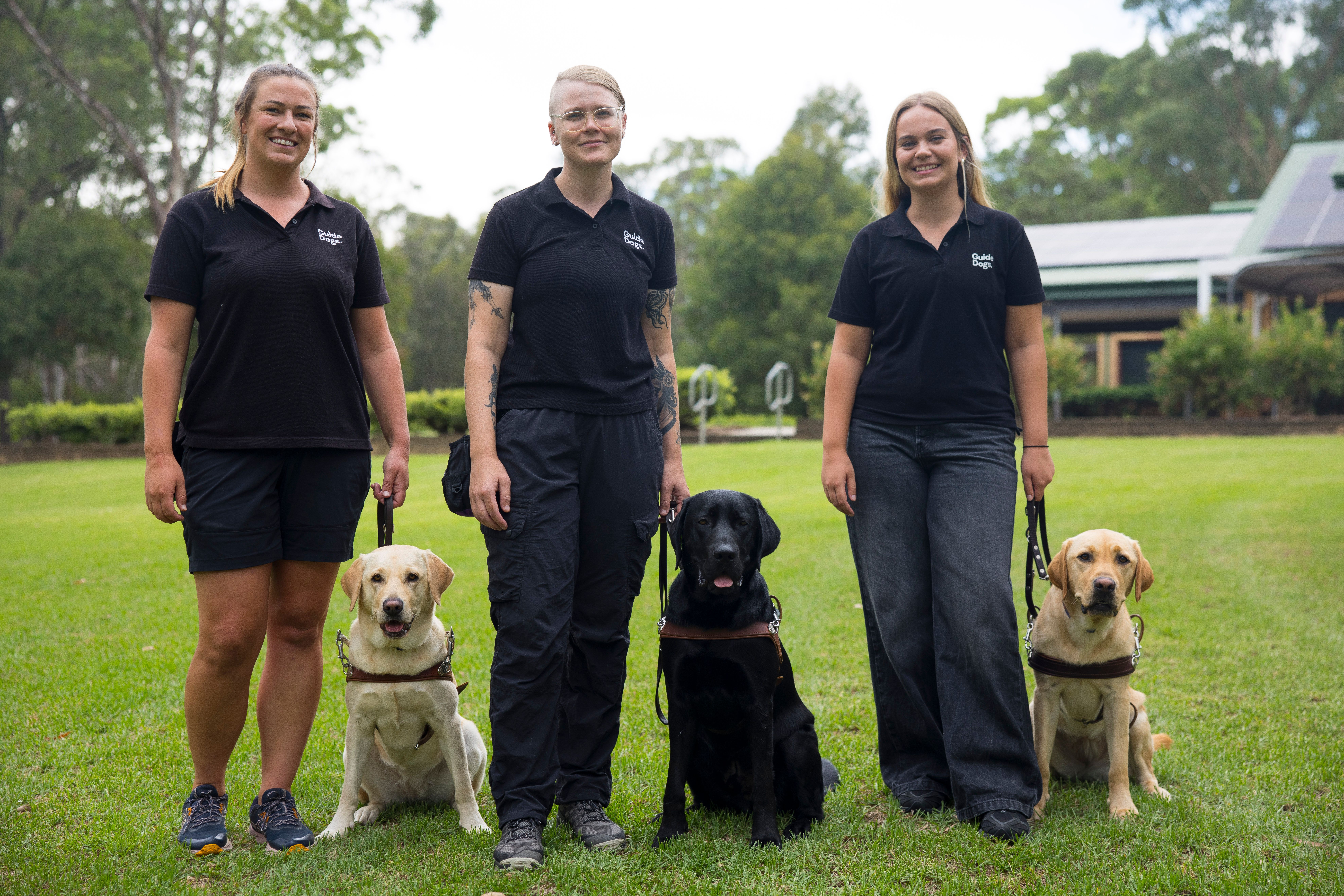
The Handler and Guide Dog Partnership.
Each Guide Dog Team is formed through a very special partnership between a person with low vision or blindness (the Guide Dog Handler) and their Guide Dog. This relationship is built on trust, respect, loyalty, training and love, and it’s important to understand this relationship before you apply for a Guide Dog.
While many people know about a GuideEach Guide Dog Team is formed through a very special partnership between a person with low vision or blindness (the Guide Dog Handler) and their Guide Dog. This relationship is built on trust, respect, loyalty, training and love, and it’s important to understand this relationship before you apply for a Guide Dog.
While many people know about a Guide Dog’s extensive training, it’s vital to know that Guide Dog Handlers also undergo intensive training. Throughout this training process, Handlers develop the specialised skills they need to create a successful partnership with their Guide Dog. .
Please read the Guide Dog Mobility Information Pack below for all the details on what’s involved and how to apply for a Guide Dog.
The Guide Dog application process.
Guide Dogs are unique, just like the people they support.
That’s why we take the time to learn about every person and potential Guide Dog’s situation, lifestyle, and temperament before we can recommend a partnership.
Some of the things we consider before suggesting a Guide Dog partnership include:
- Your walking speed and balance.
- Your ability to maintain orientation when travelling.
- The types of environments you usually travel in.
- How frequently and how far you travel.
If you’re exploring how to get a Guide Dog, here’s how the Guide Dog application process works:
Contact Guide Dogs NSW/ACT and enquire about Guide Dog Mobility. You may like to speak to your Orientation and Mobility instructor about your goal to become a Guide Dog Handler or register for an information session below.
You will then be asked to read the Guide Dog Information Pack and complete the Self-Assessment checklist at the end to help you decide if Guide Dog Mobility is right for you.
A Guide Dog Orientation and Mobility Assessment will be conducted by a qualified Guide Dog Mobility Instructor (GDMI) generally over two sessions but this is dependent on Client needs, location and service availability.
The first session will likely be an interview over the phone or online to gather information about your needs, goals and lifestyle.
The second session will be an assessment of your orientation and mobility skills. The GDMI will provide the assessment to an expert panel with their recommendations, and the panel will determine if your application is approved.
You will then be matched with a dog that has successfully completed our world-class Guide Dog training program. But the work doesn’t stop there!
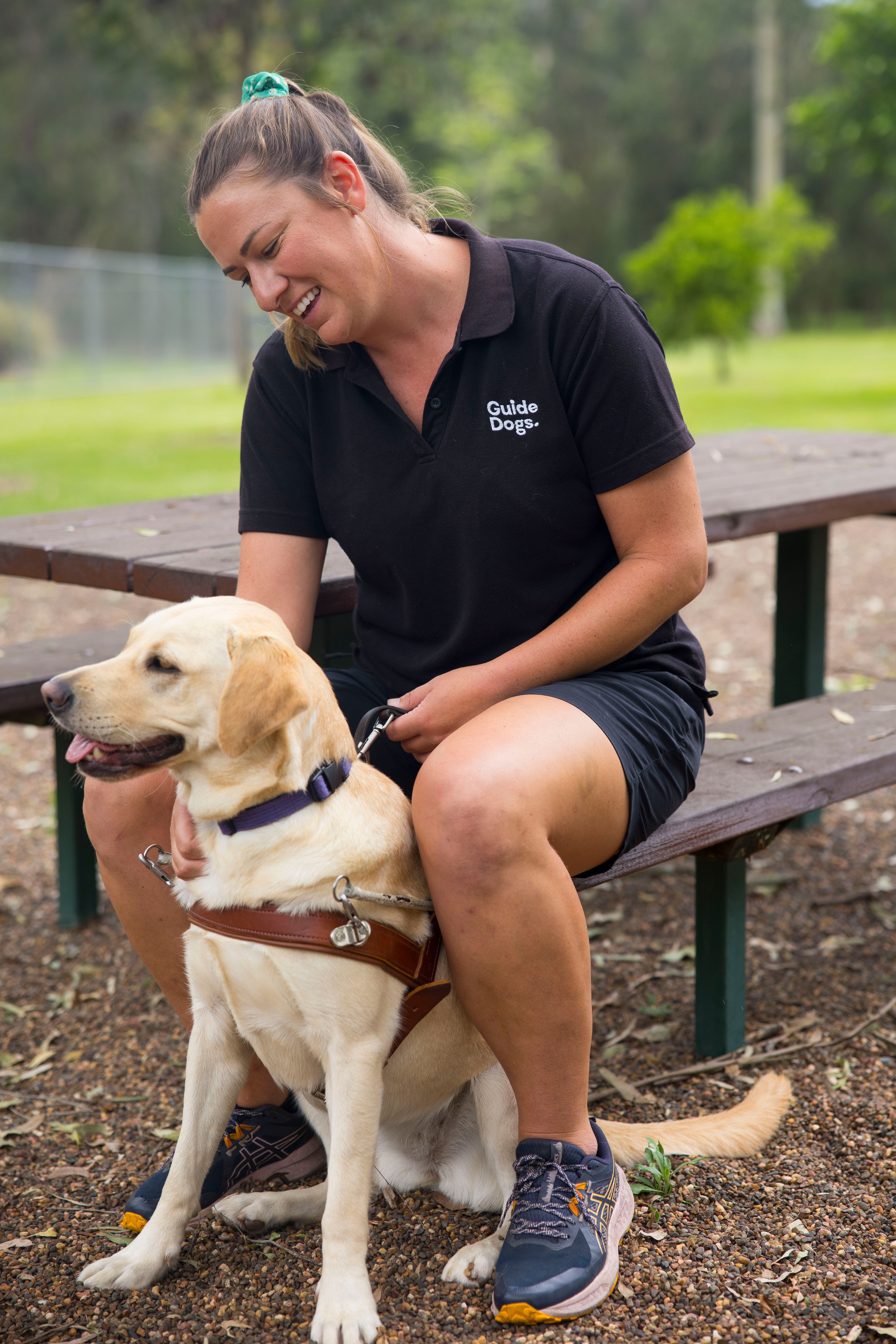
Once you’ve been partnered with your new best friend, intensive Guide Dog Mobility training begins. Your Guide Dog Mobility Instructor will design a training program that best suits your needs in consultation with you.
.jpg?w=3200&h=4798&auto=format&q=90)
Register for an information session with Guide Dogs NSW/ACT
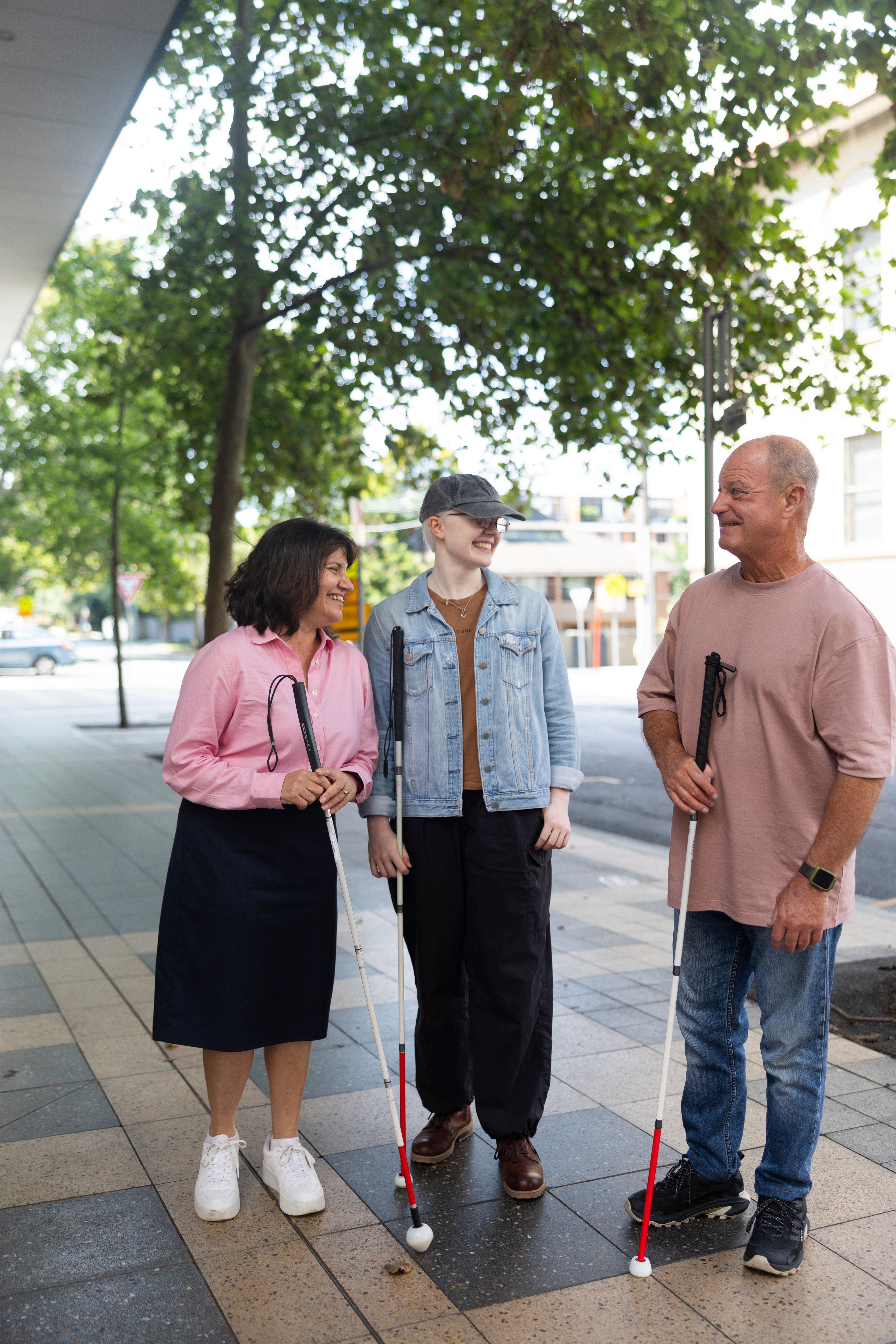
If you’re thinking about applying for a Guide Dog, we encourage you to attend our free Guide Dog Information Sessions and Guide Dog Experience Days held throughout the year.
You can attend these events to learn more about Guide Dog Mobility and decide if a Guide Dog is the right fit for you.

Hear from Handlers about their life-changing Guide Dog partnerships.
Every Guide Dog partnership is unique, but they all share a common thread: greater confidence and independence navigating daily life, along with loving companionship.
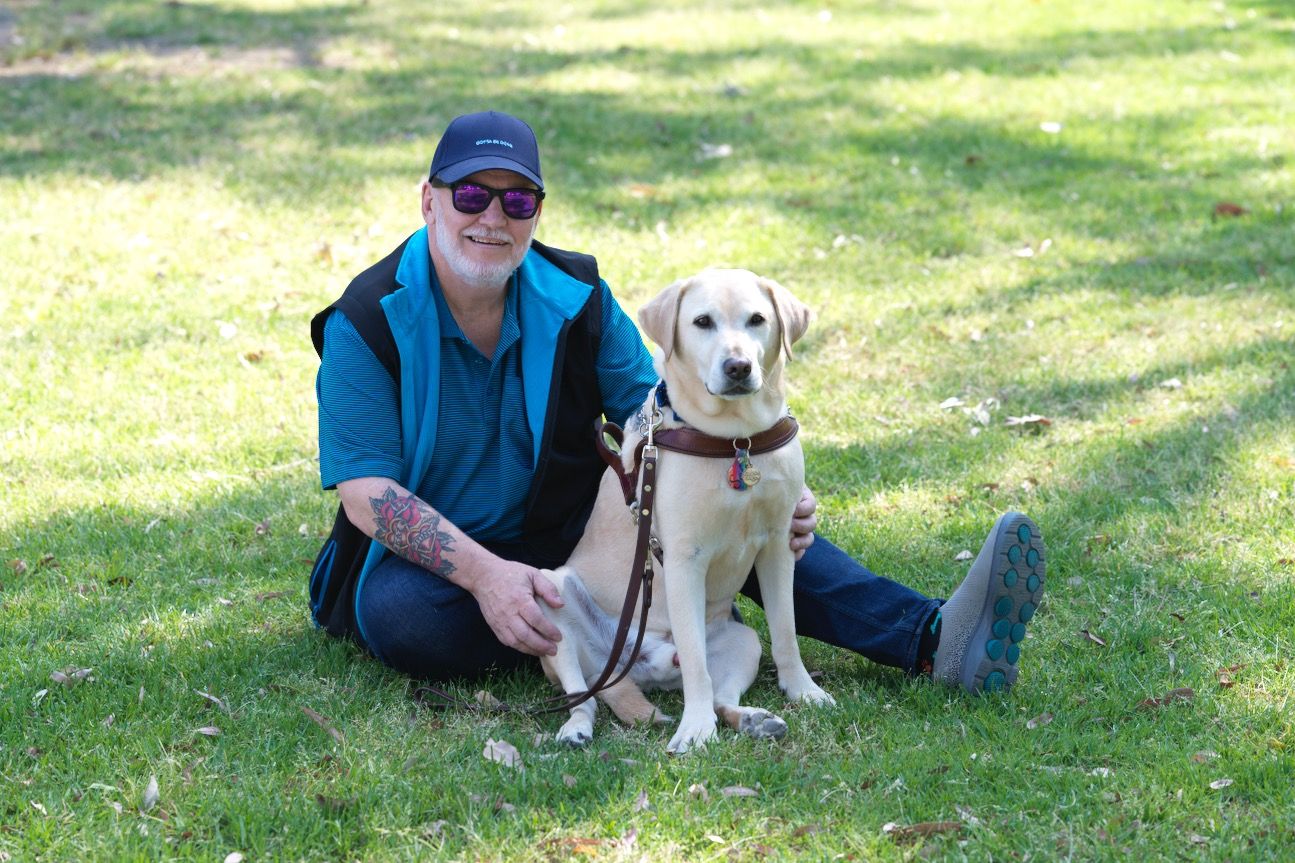
Meet Tony and Solo
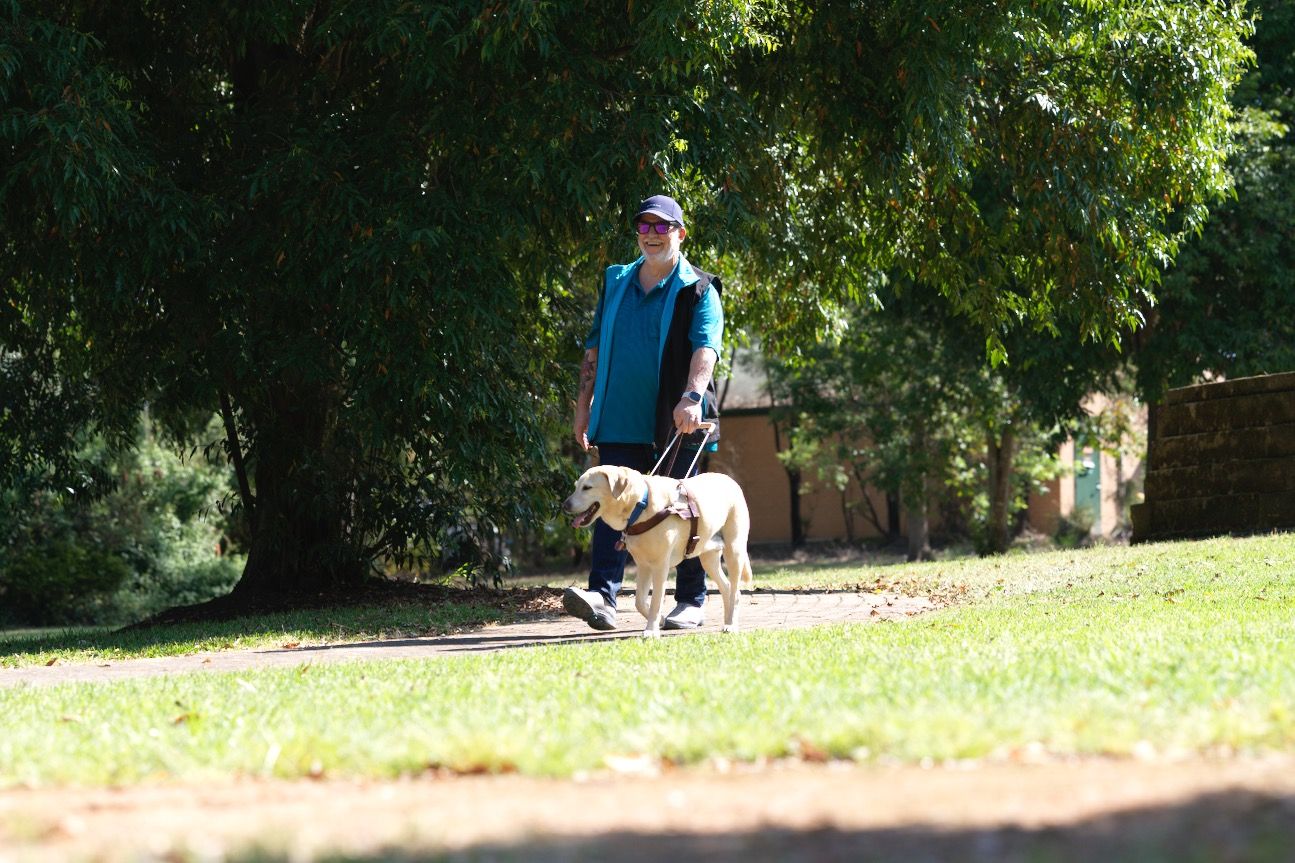
After being a cane user for many years, Tony decided it was time for a Guide Dog. That’s when Solo came into his life! On February 14 the stars aligned, and Tony and Solo began their journey together.
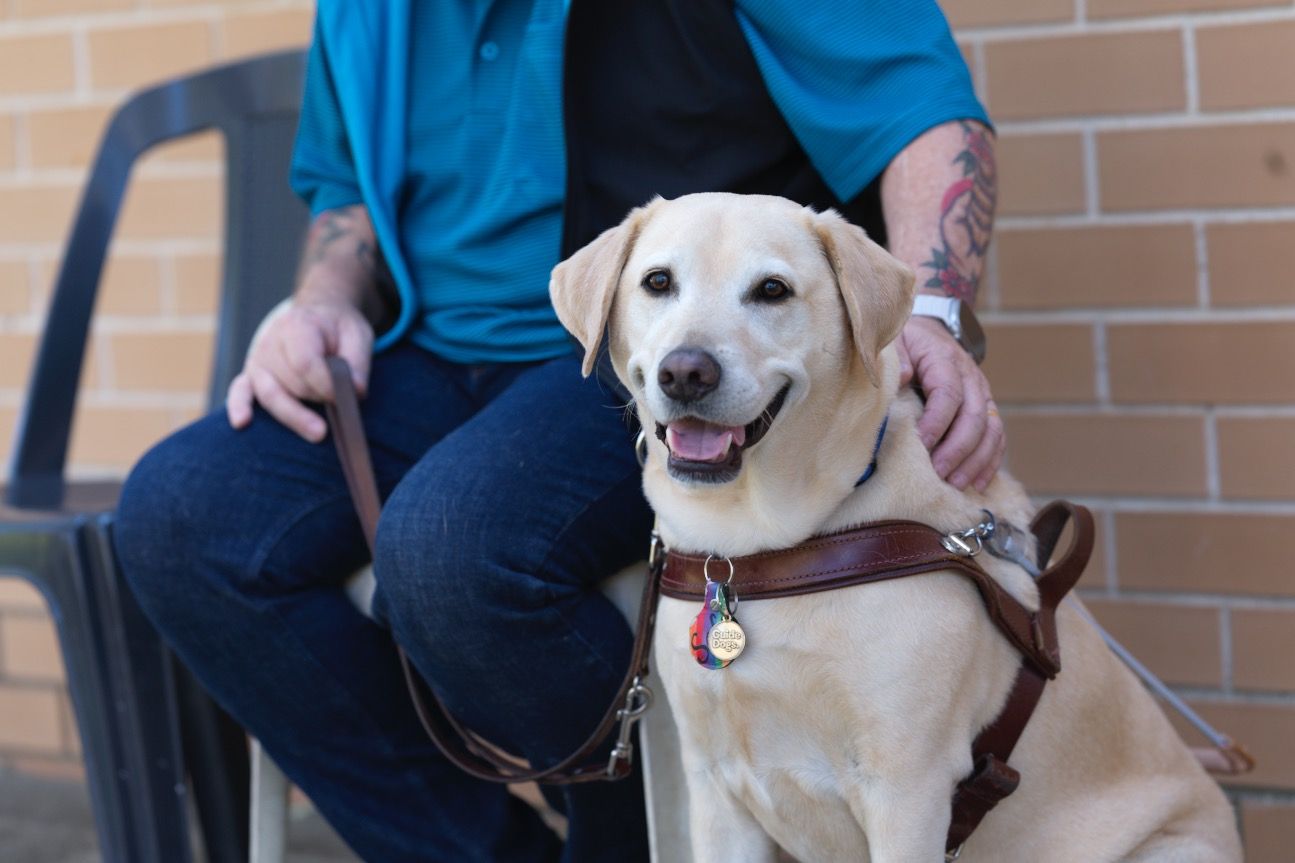
“It’s life-changing to go from not doing things independently to now having the world at your feet,” says Tony.
With Solo at his side, Tony can move independently throughout his everyday life. Their favourite activity to do together is exploring. Whether it’s a beach walk, bush walk, or a trip to the supermarket, Tony can do it all with Solo by his side.
“He’s not just a Guide Dog; he’s a family member.”
%20(2).jpg?rect=111,0,1057,708&fp-x=0.4933411841465865&fp-y=0.410069147928913&w=1024&h=298&fit=crop&crop=focalpoint&auto=format&q=90)
.jpg?rect=217,0,863,863&w=1200&h=1200&fit=min&auto=format&q=90)
.jpg?rect=217,0,863,863&w=1200&h=1200&fit=min&auto=format&q=90)
Frequently asked questions: applying for a Guide Dog
Who can get a Guide Dog, and how do I qualify?
A person with significant vision changes who requires a primary mobility aid, such as a long cane, to travel independently and safely may be a suitable applicant for a Guide Dog and Guide Dog Mobility training. Applicants must be physically fit enough to provide their Guide Dog with the required exercise and care. They also need to be willing and motivated to put in the effort needed to learn how to work as a team.
What is Guide Dog Mobility?
Guide Dogs are highly trained assistance animals. Their skills and temperament meet the International Guide Dog Federation’s standards for supporting the independent mobility of people who are blind or have low vision. A person who works with a Guide Dog is called a Guide Dog Handler. Together, the Handler and Guide Dog form a special partnership, each playing a vital role in achieving the best mobility outcomes.
A Guide Dog can:
Assist the Handler to avoid obstacles in their immediate path.
Stop at changes in surface level, such as kerbs or steps.
Locate destinations they have been taught to find.
A Guide Dog cannot:
Assess traffic flow and decide when it is safe to cross the road.
Guide to any destination in a new location. (A Guide Dog is not a GPS; it must be trained to target new objectives such as landmarks or buildings.)
How could Guide Dog Mobility help me?
A Guide Dog may provide faster and more fluid mobility through complex environments, such as crowded areas, giving you greater confidence and less stress when navigating to destinations. A Guide Dog can locate various objects for you, such as doors, shop counters and poles for light-assisted crossings. They can also maintain a straight line of travel, for example, when crossing the road or supporting you to align with access ramps.
What happens after you are matched with a Guide Dog?
Once you have been successfully matched and formed a Guide Dog partnership, you’ll start training together. Training programs are tailored to each individual’s needs. They typically run for three to four weeks (or as long as you need). To achieve the best possible outcome during this training period, you’ll need to be available each weekday.
Where does Guide Dog training take place?
Training can take place either at your home or in a residential class program at a motel. If your home life is busy, it can be a good idea to bond with your dog in a location that enables you to focus on your new skill development and your partnership with your dog. You will still receive training in your home once this initial training is complete. Guide Dog Mobility training often allows for more than one Client to be present, which can provide opportunities for peer support and new connections.
As training progresses, the Handler and Guide Dog Team moves on to travelling in more complex and dynamic environments.
Training also includes:
- public transport
- shopping centres
- traffic awareness
- cafés
- other environments you might frequent regularly.
What are your responsibilities as a Guide Dog Handler?
You must be able to maintain the health and wellbeing of your dog; Guide Dogs need to stay happy and healthy to complete their important work!
You’ll be responsible for daily health checks, grooming and ensuring that your Guide Dog has plenty of exercise, along with time to play and enjoy being a dog.
You should also care for your dog’s basic needs, such as providing food and water and ensuring a safe, secure place for rest and exercise. Additionally, you should provide your dog with access to communal areas and make sure they feel like a welcomed member of the household.
It’s also important to maintain and develop your Guide Dog’s skills by reinforcing their training and maintaining a routine, especially in the early stages of the partnership.
Following your initial training, you’ll continue to receive support and training through our in-person follow-ups. These will occur at one, three, six and 12 months in the first year, then annually until your dog turns eight.
You can also contact us at any time if you need help addressing any issues with your dog or learning new routes and destinations together.
What happens when Guide Dogs retire?
Like all of us, dogs eventually get older and start to slow down. After your Guide Dog turns eight, in-person follow-ups will occur every six months until your dog retires.
Deciding when to retire a Guide Dog is one of the hardest decisions a Guide Dog Handler will make, and our instructors will work closely with you to help make the right decision for you and your dog.
When a Guide Dog retires, in most cases they will continue living with the Handler as a pet in well-deserved retirement.
If it is not possible for the dog to continue living with their Handler, the Handler can nominate a family member or friend to look after the dog in their retirement. If needed, Guide Dogs NSW/ACT can help find a loving home for the Guide Dog on retirement.
A Handler or a designated carer can access a $1,000 annual retired Guide Dog fund to help support their dog’s ongoing care. As a Handler, it’s your choice how you’d like to arrange your Guide Dog’s retirement. There is no right or wrong decision, and we understand that everyone’s circumstances differ. That’s why we are here to support you every step of the way.

.jpg?rect=0,1116,5464,5706&fp-x=0.5&fp-y=0.4845448985029469&w=3200&h=2400&fit=crop&crop=focalpoint&auto=format&q=90)


