
Low Vision Orthoptic Service.
Understand your level of functional vision and learn techniques to read different printed materials.
What is Orthoptics and how can the Guide Dogs NSW/ACT Low Vision Orthoptics Service support you?
Orthoptics is a branch of eye care that focuses on understanding how your eyes work together and how vision conditions affect the way you see and process visual information. Rather than using surgery or medication, Orthoptics provides practical strategies, assessments and exercises to help people make the most of their vision and reach their personal goals.
At Guide Dogs NSW/ACT, our Low Vision Orthoptics Service supports Clients across NSW and the ACT to maximise the use of their remaining vision, so they can continue to access information in their daily life. Perhaps you’d like to:
- read your mail.
- flip through the newspaper.
- look up ingredients on food packaging.
- continue watching television.
Guide Dogs’ Low Vision Orthoptics Service helps you understand your level of functional vision and develop techniques to make these activities easier and more comfortable.
Our Low Vision Orthoptics Service is available to school-aged children, adults and older adults, helping each individual work towards greater independence and confidence in their daily life.

What’s the difference between an Orthoptist vs Optometrist?
If you’re new to accessing low vision services, you may wonder about the difference between an orthoptist and an optometrist. While both specialties play an important role in eye care, their focus and approach are quite different. Understanding the distinction can help you find the right support for your vision goals.
Orthoptists specialise in how your eyes work together and how your brain processes what you see. They assess functional vision, eye movement and coordination, and provide practical strategies and training to help people make the most of their remaining sight, particularly as part of low vision services like our Orthoptics Service at Guide Dogs.
Optometrists focus on detecting and managing eye health conditions. They prescribe glasses or contact lenses, identify vision problems or eye diseases, and refer Clients to other specialists if medical or surgical treatment is required.
Both professionals work together to support your vision including alongside your ophthalmologist. An optometrist might help you with prescriptions or identify changes in eye health, while an orthoptist helps you use your remaining vision more effectively in everyday life.
How can a Guide Dogs NSW/ACT Orthoptist assist me?
Our Orthoptists can support you by:
- Gathering information about your low vision or blindness.
- Performing a low vision orthoptics assessment to determine your current level of vision function.
- Spending time to help you discover and work towards your goals related to accessing information.
- Providing advice and information on how to maximise the use of your remaining vision, including orthoptics vision therapy activities like eccentric viewing training.
- Teaching you low vision viewing techniques and strategies to make everyday activities easier.
- Discussing and demonstrating how equipment such as low vision magnifiers may assist you.
- Helping you identify and learn about funding options that may be available to access equipment or other required services.
- Educating you on how to use your low vision magnifier or other low vision aids.
What funding can I use to access the Low Vision Orthoptics Service?
Guide Dogs NSW/ACT is a registered NDIS and My Aged Care provider. This means many people can access our Low Vision Orthoptics Service through their NDIS plan or Home Care Package.
We understand that some people with low vision may not be eligible to receive government funding. If you have low vision or blindness and don’t have access to external funding, Guide Dogs NSW/ACT can support you to achieve your goals using funding provided by generous donations from the community.
How John regained independence with Guide Dogs’ Low Vision Orthoptics Service.
Aged in his eighties, John is an active cattle farmer living on a 1,600-acre property in Cowra, NSW. Despite his rural location and long history of glaucoma, which has left him with usable vision only in his left eye and a very restricted visual field, John continues to lead a busy life.
Living several hours from Sydney made it difficult for John to access specialist support, and he wanted to find practical ways to read his mail, the newspaper and other small print more independently.
Through a Low Vision Orthoptics Service session delivered via tele-practice, John connected with a Guide Dogs NSW/ACT Orthoptist and our Tele-practice Assistant, Gail. Using the Orthoptics Kit, John was able to try a range of low vision aids during his in-home assessment.
He discovered magnifiers and lighting options that immediately made reading tasks easier and learned strategies to maximise his remaining vision.
With grant-funded equipment supplied by Guide Dogs NSW/ACT, including a HaLo Go LED magnifying lamp and a hand-held illuminated magnifier, John can now read medication labels, food packaging and farming publications independently.
He’s also planning to purchase an electronic video magnifier to help him monitor his prized stud bulls on his property.
John was thrilled to access the service without needing to travel long distances and is looking forward to building more skills with his iPhone and computer to stay connected and informed.
How do I access the Low Vision Orthoptics Service and find out more?
If you would like more information about our Low Vision Orthoptics Service, please get in touch:
- Call 1800 484 333, or
We welcome referrals and enquiries from individuals, families, health professionals, educators and community organisations.
Find more services.
Client Policies and Standards
Rights and responsibilities of our team and Clients who receive our services.
.jpg?rect=0,2047,5464,4098&w=320&h=240&fit=min&auto=format&q=90)
Connections Service
Find out about social and recreational activities for people with blindness or low vision,
.jpg?rect=0,1116,5464,5706&fp-x=0.5&fp-y=0.4845448985029469&w=320&h=240&fit=crop&crop=focalpoint&auto=format&q=90)
Orientation and Mobility for adults
Our Orientation and Mobility Service for adults can support you with everyday movement.
Guide Dog Mobility Services
Together, the Handler and Guide Dog form a special partnership, each playing a vital role in achieving the best mobility outcomes.
.jpg?rect=438,0,7036,5277&w=320&h=240&fit=min&auto=format&q=90)
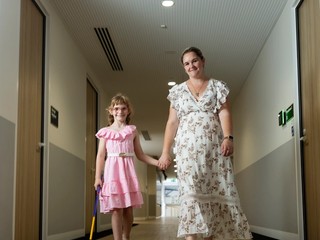
Orientation and Mobility for Children
Orientation and mobility services for children and how to apply.
.jpg?rect=0,2047,5464,4098&w=3200&h=2400&fit=min&auto=format&q=90)
.jpg?rect=0,1116,5464,5706&fp-x=0.5&fp-y=0.4845448985029469&w=3200&h=2400&fit=crop&crop=focalpoint&auto=format&q=90)

.jpg?rect=438,0,7036,5277&w=3200&h=2400&fit=min&auto=format&q=90)
